

If you are evaluating tweet deletion software under GDPR requirements, the key issue is not the marketing claim. The key issue is data processing architecture.
Quick answer
- Some cloud tools can be compliant if they implement proper controls
- Many do process personal data on external infrastructure
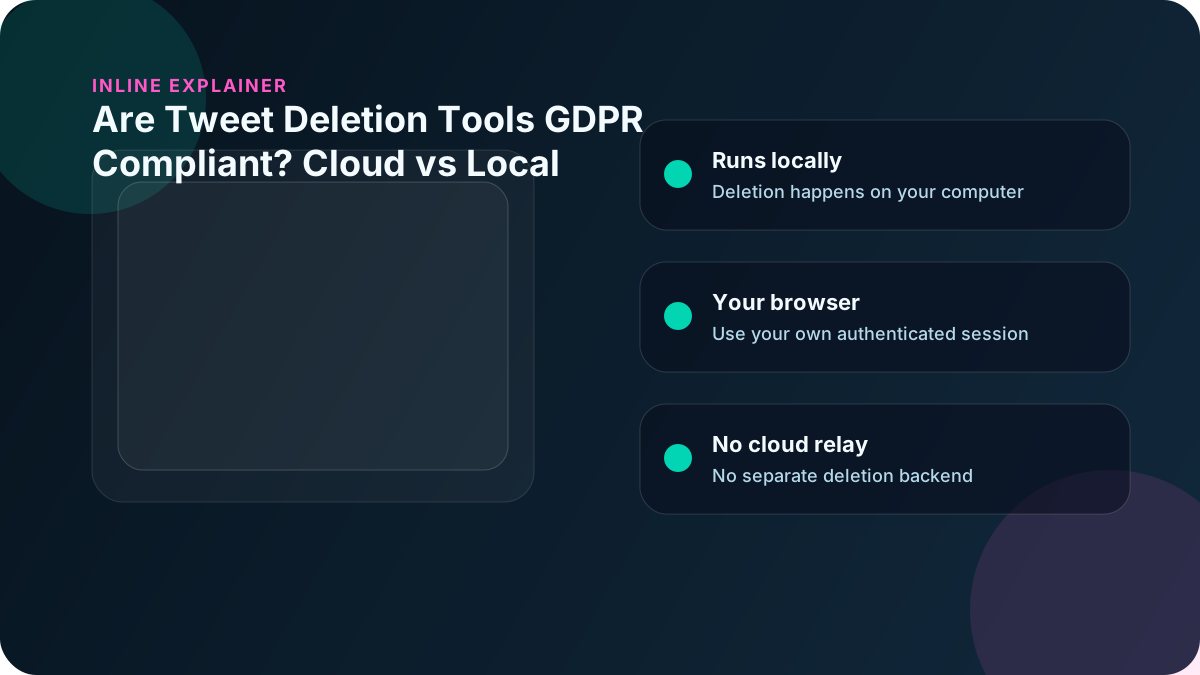
- Tools where the deletion workflow runs locally reduce processor exposure because processing stays on your machine
What GDPR questions matter most
Ask every provider:
- What data is processed and retained?
- Are OAuth tokens stored?
- Where are servers and backups located?
- How long are logs retained?
- How do they handle deletion requests and audits?
If those answers are vague, risk is high.
Cloud SaaS vs local execution
Cloud tools typically involve:
- Third-party processing
- Token retention for active sessions
- Log retention for support and operations
A locally run deletion workflow avoids most of that by keeping processing on your own endpoint.
Practical compliance guidance
For regulated teams, require:
- A clear processing map
- Documented retention policy
- Defined subprocessor list
- Incident response and breach notification policy
If the use case is highly sensitive, local-first execution is easier to justify.
If you prefer not to grant account access to a third-party cloud service, Delete My Tweets runs locally on your computer and does not store your credentials.