
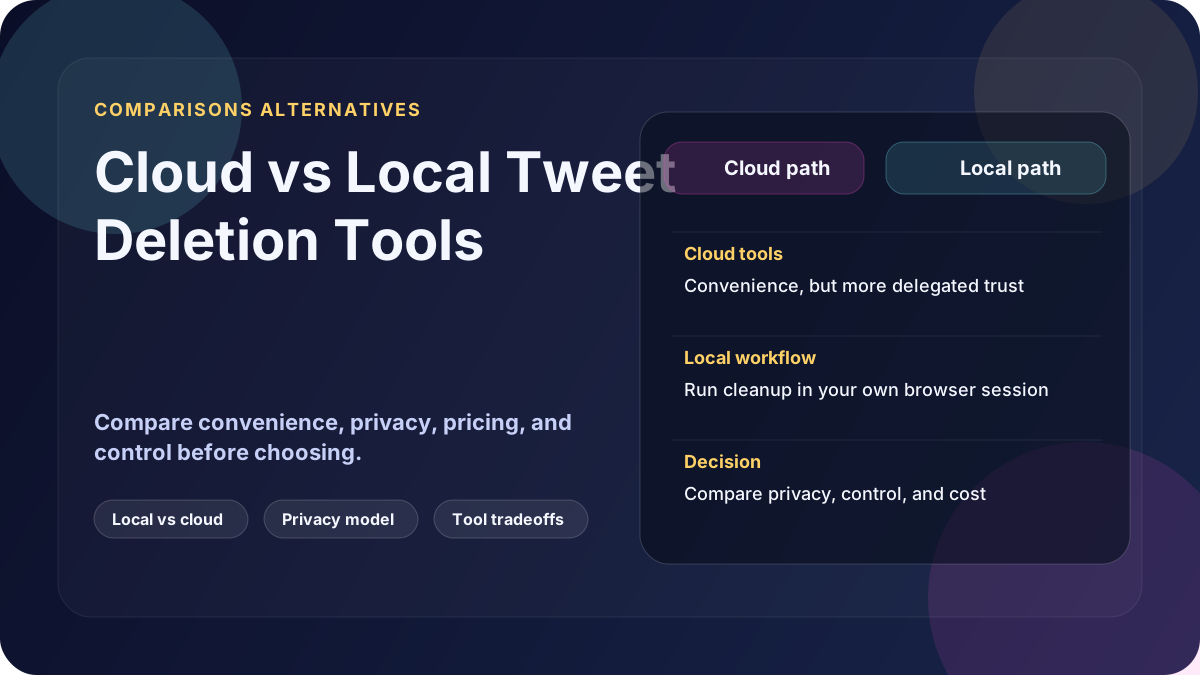
If you are deciding between a cloud tweet deletion service and a local Windows app, you are really choosing a trust model.
Cloud tools optimize convenience. Local tools optimize control.
This guide breaks down where that difference actually matters.
1. How Cloud Tweet Deletion Services Work
Most cloud tools follow a SaaS pattern:
- You connect your X account via OAuth
- The service stores tokens so it can keep acting on your behalf
- Tweet processing and deletion logic run on their infrastructure
You get speed and convenience, but your cleanup flow now depends on a third party.
2. What OAuth Tokens Actually Allow
OAuth access can authorize a tool to:
- Read account data needed for filtering
- Execute delete actions
- Keep access until you manually revoke permissions
Even legitimate providers require long-lived trust while permissions stay active.
What happens when you grant OAuth access to delete tweets
3. Where Your Data Is Processed
This is the biggest category split.
- Cloud tools: data and actions are processed remotely
- Local tools: processing stays on your machine
If privacy is the reason you are deleting tweets, this distinction is not optional.
4. API Rate Limits and Why Free Tiers Exist
Free tiers are usually constrained by:
- API windows
- Throughput limits
- Infrastructure cost controls
That is why many free plans cap volume or speed and upsell full cleanup.
TweetDelete Free Tier Limits (2026)
5. GDPR and Data Processing Implications
Compliance depends on how data is handled:
- Where processing happens
- What is retained in logs
- How tokens and identifiers are protected
- How deletion and access rights are handled
Local-first models reduce third-party processing risk by design.
Are cloud tweet deletion tools GDPR compliant?
6. Risk of Automated Bots and Suspensions
Persistent, always-on automation can increase operational risk, especially on large accounts.
Cloud schedulers and aggressive delete loops may trigger:
- Rate limits
- Temporary restrictions
- Incomplete deletion runs
Can bulk deletion trigger API violations?
7. Security and Account Access Risks
When you grant a cloud tool OAuth access:
- It can act on your behalf until you manually revoke permissions
- Token lifetimes vary — some persist indefinitely
- Revocation requires visiting X settings and removing the app
- If the service is breached, your token may be exposed
This is not a flaw in any particular tool. It is how cloud-based OAuth workflows operate by design.
8. When Cloud Makes Sense
Cloud tools can be reasonable when:
- You want scheduled, recurring auto-deletion
- You need multi-user dashboards for team management
- You are running agency workflows across multiple client accounts
- You prioritize zero setup over privacy control
- You are cleaning a small recent history and are comfortable with third-party access
9. When Local Is Safer
Local deletion is usually safer when:
- You are deleting for privacy or legal sensitivity
- You manage brand, public, or client-facing accounts
- You want one-time cleanup without ongoing permissions
- You do not want account actions routed through external servers
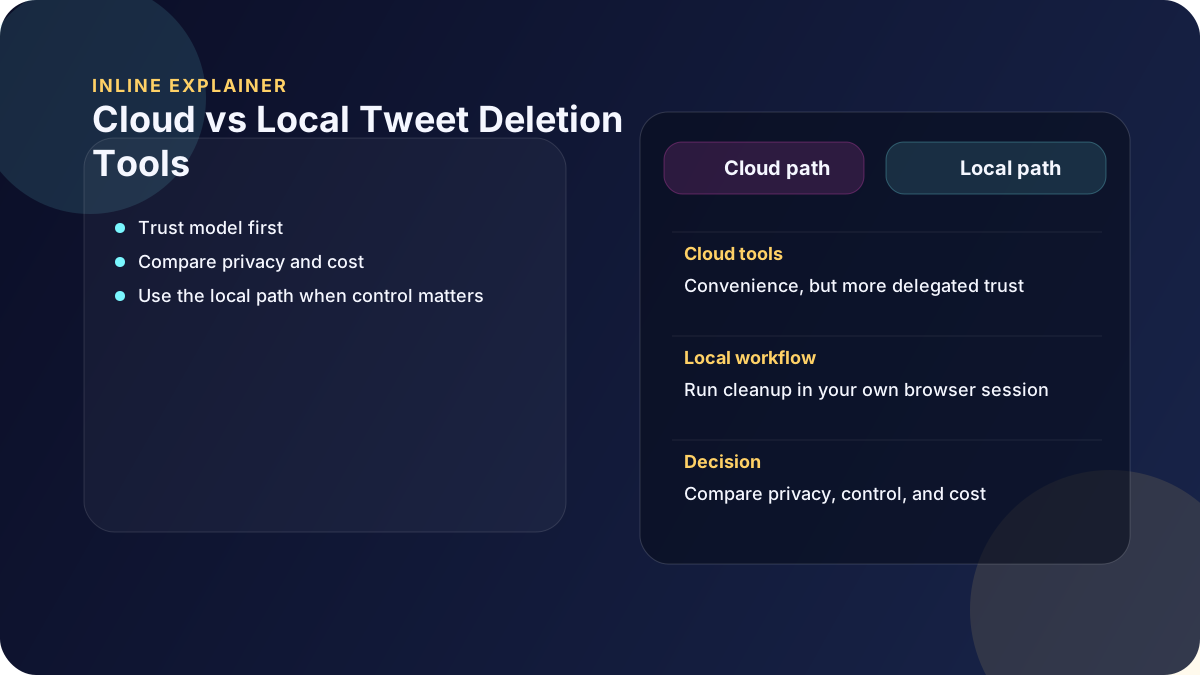
10. Comparison Table
| Feature | Cloud Tools | Local App |
|---|---|---|
| OAuth token stored on external servers | Yes | No |
| Data processed remotely | Yes | No |
| Cloud-side deletion logs retained | Often | No |
| Subscription required | Usually | No |
| Persistent account access | Yes | No |
| Deletion workflow runs locally | No | Yes |
| Needs cloud deletion backend | Yes | No |
11. Final Verdict
If your priority is speed and convenience, cloud services can work.
If your priority is privacy, controlled execution, and minimal third-party exposure, a local deletion workflow is the stronger model in 2026.
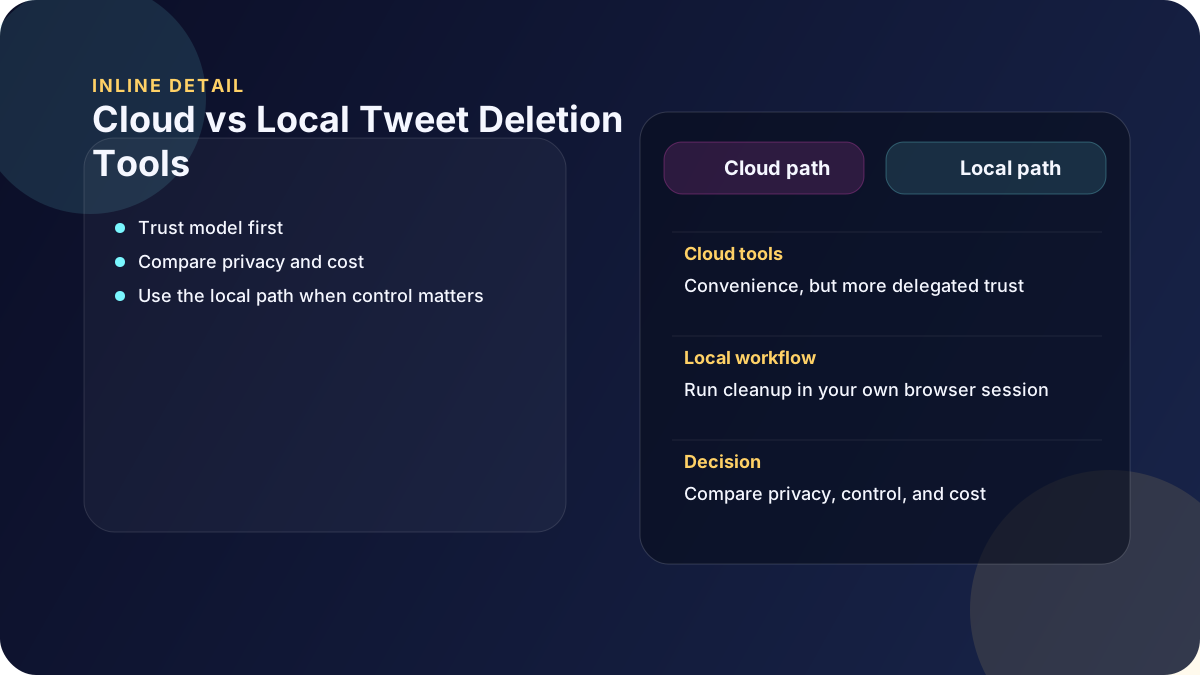
If you prefer not to grant account access to a third-party cloud service, Delete My Tweets runs locally on your computer and does not store your credentials.